



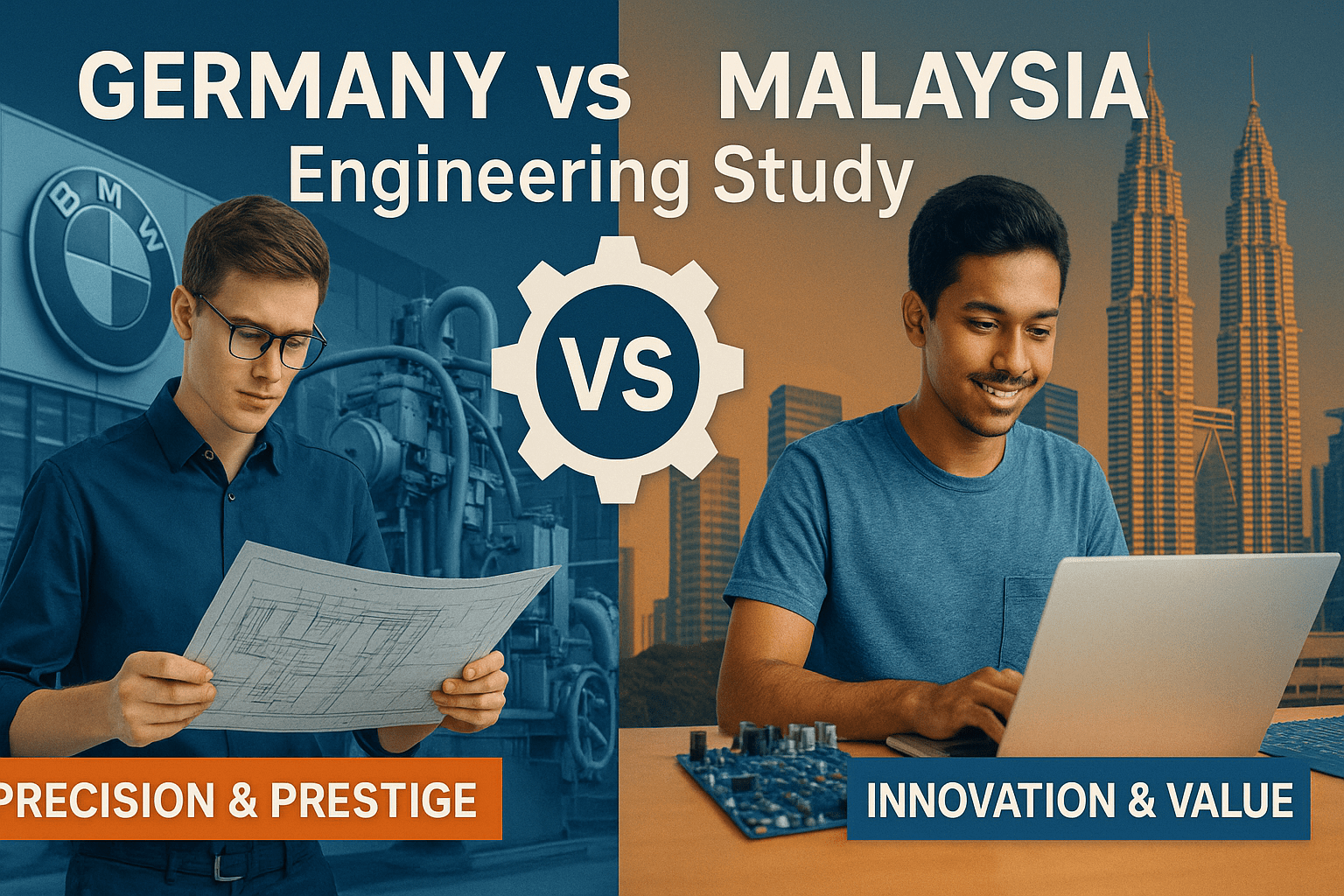
Engineering remains one of the most sought-after fields for African students seeking international education, offering excellent career prospects and the opportunity to contribute to Africa’s infrastructure development. When choosing between study destinations, Germany and Malaysia emerge as two compelling yet contrasting options for aspiring engineers.
Germany, renowned as the “Engineering Powerhouse of Europe,” offers world-class technical education, cutting-edge research facilities, and direct access to some of the world’s most innovative companies. Meanwhile, Malaysia provides affordable quality engineering education with modern facilities, English-medium instruction, and strategic positioning in Asia’s rapidly growing economy.
This comprehensive comparison examines both destinations across critical factors that matter most to African engineering students: education quality, costs, research opportunities, industry connections, and long-term career prospects. By understanding these differences, you can make an informed decision that aligns with your academic goals, financial capacity, and career aspirations.
The key insight: Germany offers premium engineering education with higher costs and competitive admission, while Malaysia provides excellent value with easier access and lower barriers to entry.
Engineering Education Quality: Academic Excellence Compared
Germany: Global Engineering Leadership
German engineering education has set global standards for over 150 years, producing innovations that have shaped modern industry. The country’s “Ingenieur” qualification is universally recognized and respected worldwide.
Academic Structure and Standards:
- Dual Education System: Combines theoretical knowledge with practical application
- Industry Integration: Close collaboration between universities and companies
- Research Focus: Heavy emphasis on innovation and R&D
- Global Rankings: 6 German universities in top 50 for engineering (QS Rankings 2025)
Top German Engineering Universities:
- Technical University of Munich (TUM): #15 globally for engineering
- RWTH Aachen University: #24 globally, automotive engineering excellence
- Technical University of Berlin: Strong in mechanical and electrical engineering
- University of Stuttgart: Leading in aerospace and automotive engineering
- Karlsruhe Institute of Technology: Excellence in computer science and engineering
Academic Rigor and Quality:
- Curriculum Depth: Comprehensive theoretical foundation with practical applications
- Faculty Excellence: World-renowned professors and researchers
- Industry Standards: Curriculum aligned with German engineering standards
- International Recognition: Degrees accepted globally without additional qualifications
Specialization Strengths:
- Automotive Engineering: Home to BMW, Mercedes-Benz, Volkswagen, Audi
- Mechanical Engineering: World-leading manufacturing and precision engineering
- Chemical Engineering: BASF, Bayer, and other chemical giants
- Renewable Energy: Leading global research in sustainable technologies
Malaysia: Modern Engineering Excellence
Malaysian engineering education has rapidly evolved to meet international standards while maintaining affordability and accessibility. The country follows the British education system with modern Asian innovations.
Academic Framework:
- International Standards: Malaysian Qualifications Framework (MQF) ensures global recognition
- Modern Curriculum: Updated programs reflecting current industry needs
- English Instruction: Eliminates language barriers for international students
- Professional Accreditation: Programs accredited by international engineering bodies
Leading Malaysian Engineering Universities:
- Universiti Teknologi Malaysia (UTM): #188 globally, top choice for African students
- University of Malaya (UM): #65 globally, strong engineering faculty
- Universiti Putra Malaysia (UPM): Excellence in agricultural and biosystems engineering
- Universiti Sains Malaysia (USM): Strong in chemical and civil engineering
- Taylor’s University: Private institution with excellent industry connections
Quality Indicators:
- Accreditation: Programs recognized by Washington Accord signatories
- Faculty Qualifications: PhD-qualified faculty with international experience
- Modern Facilities: State-of-the-art laboratories and equipment
- Industry Relevance: Curriculum designed with industry input
Emerging Strengths:
- Petroleum Engineering: Proximity to Southeast Asian oil and gas industry
- Electronics Engineering: Hub for semiconductor and electronics manufacturing
- Civil Engineering: Infrastructure development across Southeast Asia
- Environmental Engineering: Focus on sustainable development solutions
Language Requirements and Learning Barriers
Germany: Language Challenge vs. Opportunity
German Language Requirements:
- Bachelor’s Programs: Most require B2-C1 German proficiency
- Master’s Programs: Increasing number of English-taught options (500+ programs)
- PhD Programs: Often conducted in English, especially in research contexts
- Preparation Time: 12-18 months intensive German learning typically required
Language Learning Investment:
- Cost: €3,000-5,000 for intensive German courses
- Time: 600-800 hours of study to reach B2 level
- Opportunity: Bilingual skills valuable in global job market
- Support: Free language courses available through universities and integration programs
English-Taught Engineering Programs in Germany:
- Mechanical Engineering: 15+ programs available
- Computer Science: 40+ programs offered in English
- Electrical Engineering: 20+ English-taught options
- Environmental Engineering: Growing number of international programs
Long-term Language Benefits:
- Career Advantage: German language skills open European job markets
- Research Access: Access to German technical literature and documentation
- Cultural Integration: Deeper integration into German society and professional networks
- Global Mobility: German proficiency valuable in many international contexts
Malaysia: English Advantage
English-Medium Education:
- Program Availability: 90%+ of engineering programs taught in English
- No Language Barrier: Immediate access to education without additional preparation
- Communication: Easy interaction with faculty, students, and industry professionals
- Academic Resources: Access to international textbooks and research materials
Local Language Benefits:
- Bahasa Malaysia: Useful for local internships and job opportunities
- Cultural Integration: Language learning enhances social integration
- ASEAN Advantage: Malay language useful across Southeast Asia
- Optional Learning: Not required but beneficial for long-term residents
Practical Advantages:
- Immediate Start: No language preparation delays
- Cost Savings: No additional language course expenses
- Academic Focus: Full concentration on engineering studies
- International Environment: Diverse student body with English as common language
Research Facilities and Funding Opportunities
Germany: Research Powerhouse
Research Infrastructure:
- Funding: €3.3 billion annual government research investment
- Facilities: World-class laboratories and research centers
- Max Planck Institutes: Leading basic research institutions
- Fraunhofer Society: Applied research with industry applications
Research Funding for Students:
- DAAD Scholarships: €850-1,200 monthly for research students
- DFG Funding: German Research Foundation supports PhD students
- Industry Partnerships: Paid research positions with companies
- EU Horizon Programs: Access to European research funding
Research Areas of Excellence:
- Automotive Technology: Autonomous driving, electric vehicles
- Industry 4.0: Smart manufacturing and digitalization
- Renewable Energy: Solar, wind, and energy storage technologies
- Materials Science: Advanced materials and nanotechnology
PhD Opportunities:
- Structured Programs: 3-4 year funded PhD positions
- Industry Collaboration: Joint university-industry research projects
- International Exposure: Research exchanges and conferences
- Career Pathways: Clear routes to academic and industry careers
Malaysia: Growing Research Ecosystem
Research Development:
- Government Investment: RM 25 billion allocated for R&D development
- Modern Facilities: New research centers and laboratories
- International Collaboration: Partnerships with global research institutions
- Industry Focus: Research aligned with economic development priorities
Student Research Opportunities:
- MyBrain15 Scholarships: Government funding for postgraduate research
- University Research Grants: Internal funding for student projects
- Industry Collaboration: Growing partnerships with multinational companies
- Regional Networks: Access to ASEAN research collaborations
Emerging Research Strengths:
- Palm Oil Technology: World-leading research in sustainable palm oil
- Tropical Engineering: Solutions for tropical climate challenges
- Smart Cities: Urban development and infrastructure research
- Biotechnology: Medical and agricultural biotechnology applications
Research Accessibility:
- Lower Competition: More accessible research opportunities for international students
- Mentorship: Close faculty-student relationships
- Practical Focus: Research projects with real-world applications
- Quick Impact: Faster pathway from research to implementation
Industry Partnerships and Internship Opportunities
Germany: Industrial Excellence
Industry Landscape:
- Global Champions: Home to 1,500+ hidden champions and global market leaders
- Automotive Sector: BMW, Mercedes-Benz, Volkswagen, Bosch, Continental
- Engineering Giants: Siemens, ThyssenKrupp, Liebherr, KUKA
- Chemical Industry: BASF, Bayer, Henkel, Merck
Internship Programs:
- Mandatory Internships: Many programs require industrial placements
- Duration: 3-6 month internships standard
- Compensation: €800-1,500 monthly for engineering interns
- Conversion Rate: 40% of internships lead to job offers
University-Industry Collaboration:
- Dual Study Programs: Combined academic and practical training
- Research Projects: Student involvement in industry-sponsored research
- Guest Lectures: Industry professionals teaching at universities
- Career Fairs: Regular networking events with major employers
African Student Advantages:
- Diversity Programs: German companies actively seeking diverse talent
- Global Perspective: African students valued for international outlook
- Language Skills: Multilingual abilities highly appreciated
- Technical Skills: Strong mathematical and problem-solving foundations
Malaysia: Strategic Asian Gateway
Industry Ecosystem:
- Multinational Presence: 200+ Fortune 500 companies with operations
- Electronics Hub: Intel, AMD, Infineon, STMicroelectronics
- Automotive Assembly: Proton, Perodua, BMW, Mercedes-Benz assembly plants
- Oil & Gas: Petronas, Shell, ExxonMobil, Murphy Oil
Internship Culture:
- Industrial Training: Mandatory 6-month industrial training for most programs
- Compensation: RM 800-2,000 monthly ($185-$465)
- Skill Development: Hands-on experience with modern equipment and processes
- Networking: Building professional relationships for future careers
Regional Opportunities:
- ASEAN Access: Internships across Southeast Asian countries
- Growing Markets: Exposure to rapidly developing economies
- Infrastructure Projects: Involvement in major development initiatives
- Technology Transfer: Bridge between developed and developing markets
Advantages for African Students:
- Cultural Similarity: Easier adaptation compared to Western countries
- English Communication: No language barriers in workplace
- Mentorship Culture: Strong support systems for international students
- Career Pathways: Clear progression from internship to employment
Graduate Employment Rates and Starting Salaries
Germany: Premium Employment Market
Employment Statistics:
- Graduate Employment Rate: 95% within 6 months of graduation
- Engineering Shortage: 320,000 unfilled engineering positions nationwide
- International Graduates: 85% of foreign engineering graduates find employment
- Career Progression: 40% receive promotions within first 2 years
Salary Expectations (Entry-Level):
- Mechanical Engineers: €45,000-55,000 annually ($49,500-$60,500)
- Electrical Engineers: €48,000-58,000 annually ($52,800-$63,800)
- Software Engineers: €50,000-65,000 annually ($55,000-$71,500)
- Chemical Engineers: €52,000-62,000 annually ($57,200-$68,200)
Career Growth Potential:
- Senior Engineer (5 years): €65,000-85,000 annually
- Engineering Manager (10 years): €80,000-120,000 annually
- Technical Director (15 years): €100,000-150,000+ annually
Employment Sectors:
- Automotive Industry: 35% of engineering graduates
- Mechanical Engineering: 25% of graduates
- Electronics/IT: 20% of graduates
- Chemical/Process: 15% of graduates
- Consulting: 5% of graduates
Malaysia: Competitive Regional Market
Employment Landscape:
- Graduate Employment Rate: 85% within 6 months for engineering graduates
- Skills Demand: High demand for technical skills in manufacturing and services
- Multinational Opportunities: Direct access to global companies’ regional operations
- Government Initiatives: Programs supporting graduate employment
Salary Ranges (Entry-Level):
- Electrical Engineers: RM 40,000-50,000 annually ($9,300-$11,600)
- Mechanical Engineers: RM 38,000-48,000 annually ($8,800-$11,200)
- Software Engineers: RM 45,000-60,000 annually ($10,500-$14,000)
- Chemical Engineers: RM 42,000-55,000 annually ($9,800-$12,800)
Career Advancement:
- Senior Engineer (5 years): RM 60,000-80,000 annually
- Engineering Manager (10 years): RM 90,000-130,000 annually
- Technical Director (15 years): RM 150,000-250,000+ annually
Employment Opportunities:
- Electronics Manufacturing: 30% of engineering graduates
- Oil & Gas: 20% of graduates
- Construction/Infrastructure: 20% of graduates
- Automotive: 15% of graduates
- IT/Software: 15% of graduates
Immigration Policies and Pathways for Engineers
Germany: Clear Path to Permanent Residency
Student Visa to Work Permit:
- Job Search Visa: 18-month extension after graduation to find employment
- Work Permit: Automatic with job offer in engineering field
- EU Blue Card: Fast-track for qualified engineers with job offers
- Permanent Residency: Available after 21 months with EU Blue Card
Long-term Immigration Benefits:
- EU Mobility: Right to work across 27 European Union countries
- Family Reunification: Bring spouse and children after securing employment
- Social Benefits: Access to healthcare, education, and social security
- Citizenship Path: German citizenship possible after 6-8 years
Requirements for Engineers:
- Qualification Recognition: Engineering degree must be recognized
- Language Skills: B1 German required for permanent residency
- Employment: Continuous employment in engineering field
- Integration: Completion of integration courses
Professional Recognition:
- Engineer Title: Right to use “Ingenieur” title after recognition
- Professional Associations: Membership in VDI (Association of German Engineers)
- Continuing Education: Access to professional development programs
- Global Recognition: German engineering qualification respected worldwide
Malaysia: Flexible Opportunities
Post-Study Work Options:
- Graduate Pass: 12-month work permit for job searching
- Employment Pass: Long-term work permit with job offer
- Permanent Residency: Available through various schemes
- Malaysia My Second Home: Long-term residency program
Immigration Advantages:
- Skills-Based: Preference for technical and engineering skills
- Family Options: Dependent visas for spouse and children
- Business Opportunities: Entrepreneur and investor visa options
- Regional Access: Strategic location for Southeast Asian careers
Professional Development:
- Board of Engineers Malaysia (BEM): Professional registration for engineers
- Continuing Professional Development: Mandatory for licensed engineers
- ASEAN Recognition: Engineering qualifications recognized across ASEAN
- International Mobility: Malaysian experience valued globally
Long-term Prospects:
- Permanent Residency: Multiple pathways available
- Citizenship: Possible after 10-12 years of residency
- Business Development: Opportunities to start engineering consultancies
- Regional Career: Access to broader Southeast Asian market
Long-term Career Prospects and Global Mobility
Germany: European and Global Leadership
Career Trajectory:
- Technical Excellence: Path to becoming world-class technical expert
- Management Track: Leadership opportunities in global companies
- Entrepreneurship: Strong support for engineering startups
- Academic Career: Research and teaching opportunities at top universities
Global Opportunities:
- Multinational Assignments: German companies operate globally
- EU Mobility: Easy transfer between European offices
- Consulting: Independent consulting opportunities worldwide
- Technology Transfer: Bridge between German technology and global markets
Africa Connections:
- Development Projects: German engineering involvement in African infrastructure
- Technology Transfer: Opportunities to bring German technology to Africa
- Consulting: Independent consulting for African development projects
- Multinational Roles: German companies with African operations
Malaysia: Asian Market Leadership
Career Development:
- Regional Expertise: Deep understanding of Asian markets and practices
- Cultural Bridge: Ability to work across diverse Asian cultures
- Cost-Effective Solutions: Experience with budget-conscious engineering
- Sustainable Development: Focus on environmentally responsible engineering
Regional Opportunities:
- ASEAN Integration: Career mobility across 10 Southeast Asian countries
- Infrastructure Development: Major projects across developing Asia
- Technology Hub: Access to growing Asian technology sector
- Energy Sector: Oil, gas, and renewable energy opportunities
Africa-Asia Bridge:
- Trade Relationships: Growing economic ties between Africa and Asia
- Infrastructure Expertise: Malaysian experience relevant to African development
- Cost-Effective Solutions: Budget-appropriate technology for African markets
- Cultural Understanding: Multicultural Malaysian experience valuable globally
Making Your Decision: Key Considerations
Choose Germany If:
- You can invest 12-18 months learning German
- You prefer traditional engineering excellence and prestige
- Your budget allows for higher living costs (€12,000-18,000 annually)
- You want EU citizenship and mobility rights
- You plan a career in automotive, mechanical, or precision engineering
- You value research opportunities and academic depth
Choose Malaysia If:
- You prefer immediate English-medium education
- You need cost-effective quality education ($6,000-18,000 annually)
- You want cultural compatibility and easier adaptation
- You’re interested in Asian markets and regional opportunities
- You plan to work in electronics, oil & gas, or infrastructure
- You value practical, industry-focused education
Get Expert Guidance for Your Engineering Education Choice
Choosing between Germany and Malaysia for engineering education is a decision that will shape your entire career. At Afri Connection, we’ve helped over 150 African engineering students navigate this choice, with deep expertise in both German and Malaysian engineering education systems.
Our Engineering Education Consultation:
Technical Program Analysis: ✅ Specialization Guidance: Match your interests with program strengths
✅ University Selection: Identify best institutions for your goals
✅ Admission Strategy: Navigate competitive application processes
✅ Career Pathway Mapping: Plan your entire engineering career journey
Practical Support: ✅ Language Planning: German learning roadmap or English program selection
✅ Financial Planning: Realistic budgeting for both destinations
✅ Visa Guidance: Immigration pathway planning and requirements
✅ Industry Connections: Network with alumni and industry professionals
Schedule Your Free Engineering Consultation
Conclusion: Engineering Your Path to Success
Both Germany and Malaysia offer excellent opportunities for African engineering students, but they serve different purposes and priorities. Germany provides world-class engineering education with premium career prospects, while Malaysia offers affordable quality education with Asian market access.
Your choice should align with your financial capacity, language preferences, career goals, and long-term vision. Remember, there’s no universally “correct” choice – only the choice that fits your unique circumstances and aspirations.
The engineering world needs African talent and perspectives. Whether you choose German precision or Malaysian innovation, you’ll be equipped to contribute to Africa’s development and global engineering excellence.
Ready to engineer your future? Contact Afri Connection today for expert guidance tailored to your engineering career goals.


